Plano Said No to the Taxes, Not the Stars: What Happens at Willow Bend
On November 3, Plano voters rejected Proposition A by 54.6 percent to 45.4 percent, with more than 102,000 ballots cast. The result killed five proposed venue taxes for the Dallas Stars' planned arena at The Shops at Willow Bend. It did not kill the arena, and the difference between those two things is where this story goes next.
Watch: the proposed Stars arena district at Willow Bend, animated from the concept renderings released by the City of Plano and Centennial.
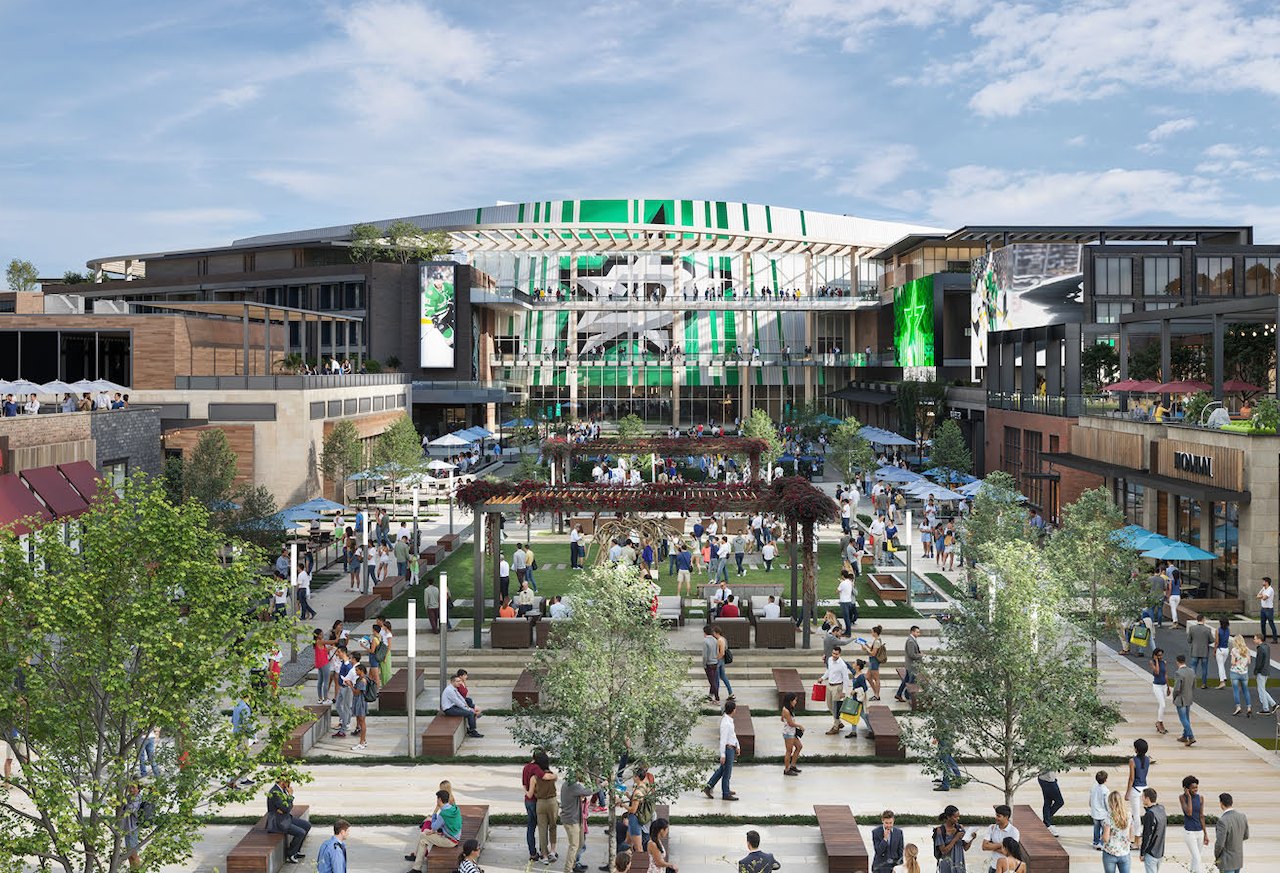
The proposed district's central plaza, looking toward the arena entrance. Concept rendering released by the City of Plano and Centennial in June 2026. The project's lead design firm, HNTB, has not released final designs.
What voters actually decided
Proposition A asked Plano to authorize a package of taxes aimed mostly at visitors: a hotel occupancy tax of up to 2 percent, a short-term car rental tax of up to 5 percent, an event parking tax of up to $3 per vehicle, an admissions tax of up to 10 percent of ticket prices, and a facility-use tax of up to $5,000 per game on each major-league team playing in the building.
The taxes were meant to speed up paying off the city's share of the project. Last June, the Plano City Council approved a non-binding agreement under which the city would contribute $700 million in bonds, backed by a tax increment reinvestment zone, toward a $1 billion, 18,000-seat arena that the city would own and the Stars would lease for 30 years. Plano ISD is contributing up to $250 million through the zone. The arena anchors a $3 billion redevelopment of the Willow Bend mall site at West Park Boulevard and the Dallas North Tollway; the surrounding mixed-use development, roughly $2 billion, is privately financed, and the team covers arena costs above the city's $700 million.
City staff estimated the Proposition A taxes could have raised as much as $1 billion over time, with out-of-town visitors expected to pay the bulk of it. Voters were not persuaded. The Stars' corporate entity spent nearly $1 million campaigning for the measure; the opposition, organized as Stop the Stars Arena under slogans like "Puck No!", argued affordability and traffic, and won by about 9 points.
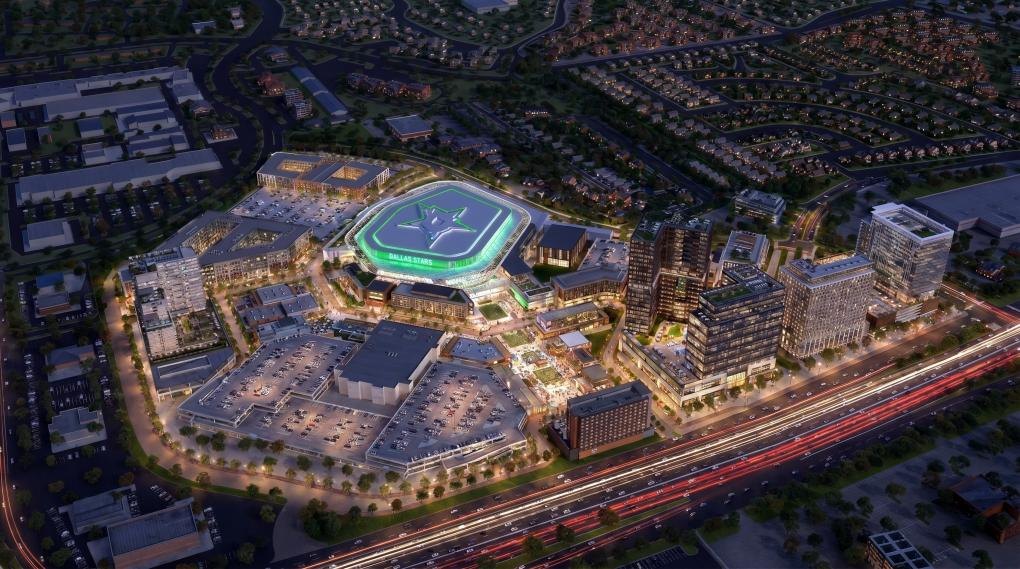
The proposed $3 billion district at night, with the Stars logo on the arena roof and the Dallas North Tollway in the foreground. Rendering: City of Plano and Centennial.
What happens next
Nobody involved is treating the vote as the end of the project. "The proposed redevelopment at The Shops at Willow Bend remains an important opportunity for our community," Mayor John Muns said after the vote. City manager Mark Israelson was more specific about the mechanics: "Without authorization for these venue taxes, the proposed financing approach would need to be reassessed before City Council considers any actions related to the arena." Plano now plans to pursue financing through the state Legislature and has brought in consultants to advise on other funding options.
The Stars, for their part, are staying: "While we are disappointed that Proposition A did not pass, we are confident in the long-term vision for a city-owned arena project and the positive impact it will have on the city of Plano." Team CEO Brad Alberts has previously called the Willow Bend site "the best location for an arena in the Metroplex."
The one genuinely new threat is 15 miles south. "Plano's loss is Dallas' opportunity," Dallas City Council Member Chad West said after the vote, adding that negotiations with the Stars "aren't finished." The Stars and Mavericks resolved their American Airlines Center co-tenancy dispute in August, and both teams are committed downtown through at least the end of the 2030-31 season, which is exactly the window Plano has to fix its financing. The Stars are aiming to move into a new arena by 2031, and HNTB has been working as the project's lead design firm since August.
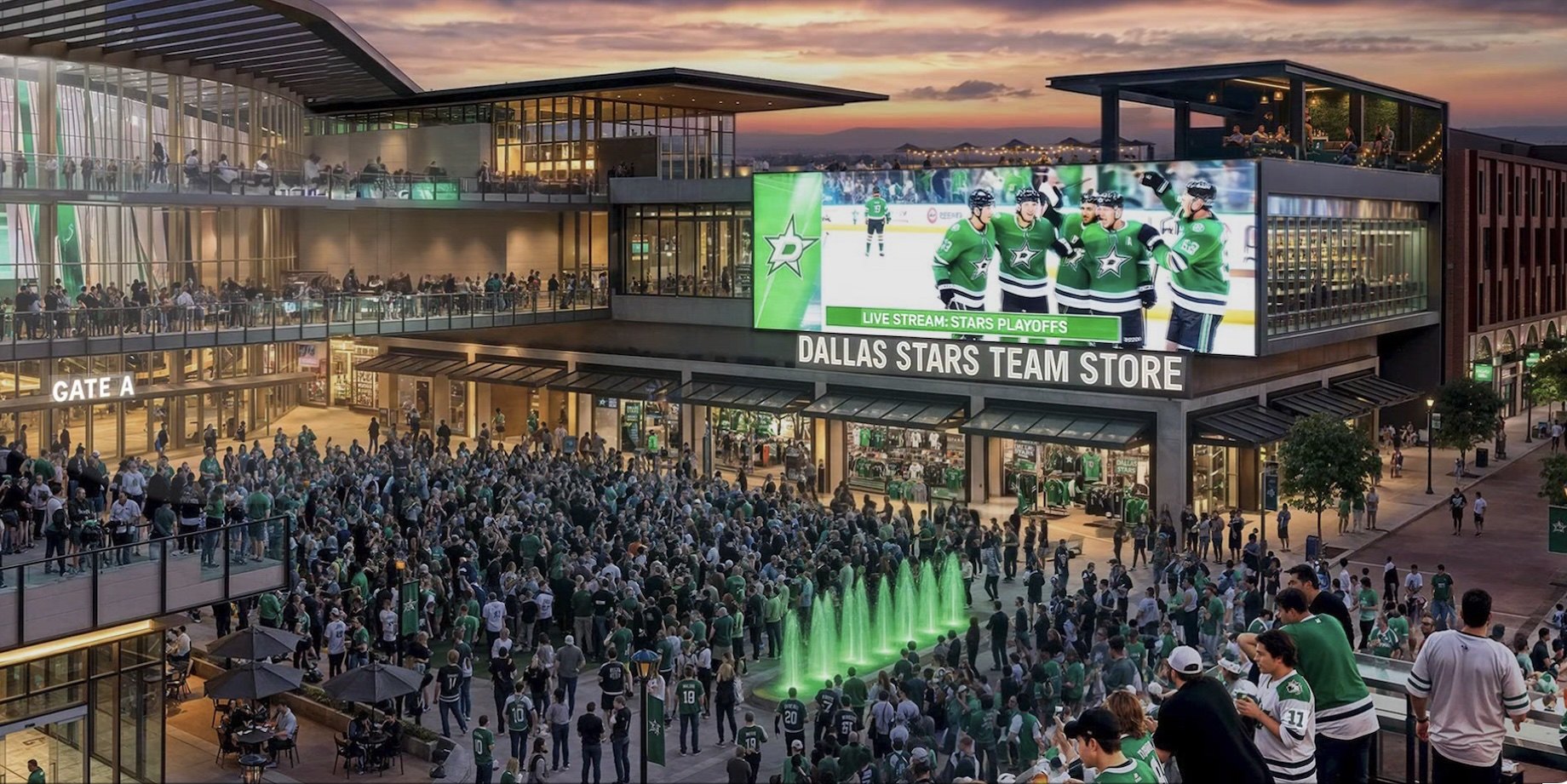
Game day outside the arena in a concept rendering, with the team store and a big screen above the plaza. Rendering: City of Plano and Centennial.
What our records show
For all the money and politics, the project has not yet touched the public construction record. No state construction filing for the arena or the Willow Bend redevelopment has appeared in the Texas Department of Licensing and Regulation records the Post tracks daily, and demolition of the mall, the last enclosed mall built in Texas, is the first physical step to watch for.
The site itself sits in one of the county's most valuable neighborhoods. In the Post's decade of Realtor ZIP code data, 75093, the ZIP containing Willow Bend, was Collin County's most expensive ZIP in 2016 through 2018, before Frisco's 75034 began its 91-month run at the top. Whatever replaces the mall will land in the middle of some of the priciest residential land in the county, which is part of why the traffic argument landed with voters, and part of why neither the city nor the team is walking away.
What to watch: a Plano City Council financing reassessment, any arena bill in the next legislative session, a state filing for the arena or the mall demolition, and any movement from Dallas. The Post tracks the construction filings daily and will update this story when the first one lands.
Sources: Front Office Sports, Bisnow, Sports Business Journal, The Stadium Business.
The Post's data stories, bar and restaurant rankings, construction leaderboards, school and housing reports, plus our regular Collin County roundup of what's opening, what's under construction, and what's worth trying.
Proposition A covered only the venue taxes. The City Council's $700 million bond commitment was approved separately in June 2026 and was not on the ballot.
← All Collin County filings · Rankings · Republish this story free · More Plano news
Discussion
Comments are for email subscribers, it keeps the discussion local and spam-free, and subscribers get an email when someone replies to them.